|
Nu?
What's New? Gary Mokotoff, Editor Volume 14, Number 25 | June 23, 2013 Every
government puts value on preserving its history. That is why we have
national archives. Genealogy preserves history; the history of a
family. It cannot be done without access to records, just as historians
cannot preserve a nation's history without access to records. It is a
greater good than the right to privacy. It is a greater good than the
risk of identity theft.
Past issues of Nu? What's New? are
archived at http://www.avotaynu.com/nu.htm
|
||
|
Lo Tishkach European Jewish Cemeteries Initiative Partners with VAAD of Ukraine
 Beginning
in early June, the VAAD (Association of Jewish Organizations and
Communities) of Ukraine will start surveying Jewish cemeteries in the
regions of L’viv and Poltava oblast. Data and thousands of
photographs from these surveys of more than 300 sites undertaken by Lo
Tishkach European Jewish Cemeteries Initiative (LT) in Ukraine will be
processed and uploaded to the LT database, and published by the end of
2013 in both English and Russian. Information about the project is at http://www.lo-tishkach.org/en/index.php?categoryid=28&p2_articleid=200. Beginning
in early June, the VAAD (Association of Jewish Organizations and
Communities) of Ukraine will start surveying Jewish cemeteries in the
regions of L’viv and Poltava oblast. Data and thousands of
photographs from these surveys of more than 300 sites undertaken by Lo
Tishkach European Jewish Cemeteries Initiative (LT) in Ukraine will be
processed and uploaded to the LT database, and published by the end of
2013 in both English and Russian. Information about the project is at http://www.lo-tishkach.org/en/index.php?categoryid=28&p2_articleid=200.Since 2009, the Centre for Jewish Education in Ukraine has surveyed Kiev, Cherkasy and Zakarpattia oblasts as well as acting as a research and training resource for similar LT projects in Chernihiv, Dniepropetrovsk, Kharkov and Odessa oblasts and in the Baltic States. LT has now identified more than 11,000 European cemeteries and mass graves in its database located at http://www.lo-tishkach.org/en/index.php?categoryid=31. “Lo Tishkach” is Hebrew for “do not forget.” International Holocaust Remembrance Alliance Wants Genealogist Input The International Holocaust Remembrance Alliance (IHRA) is conducting a survey to assist it in assessing user experiences at institutions that hold Holocaust-related material. The goal is to improve access for all users, including scholars, educators, genealogists, museum professionals, and lay researchers. It will focus on the legal, physical, and material obstacles that confront scholars and researchers who utilize Holocaust-relevant documentation. The survey is at: English: https://www.research.net/s/3T227QW Français: https://www.research.net/s/CPSBDWK Deutsch: https://www.research.net/s/L6VJV8Q Русский: https://www.research.net/s/RP83ZQX More information about the IHRA can be found at http://www.holocaustremembrance.com/focus/archives. Christine Usdin z”l 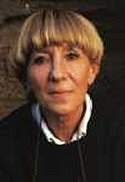 When
you read that the Jewish vital records of an entire country are being
indexed, you envision a cast of volunteers, perhaps hundreds, working
on the project. It is hard to believe that one person, Christine Usdin
of France, singlehandedly has been extracting Latvian vital records for
a number of years, posting to the JewishGen Latvia SIG Discussion
Group, sometimes daily, her latest accomplishment. Usdin extracted the
Russian-language records, and Martha Lev Zion of Israel verified the
accuracy by reading the Hebrew portion of the entry. Usdin died June 10
leaving a large vacuum in Latvian extraction work. When
you read that the Jewish vital records of an entire country are being
indexed, you envision a cast of volunteers, perhaps hundreds, working
on the project. It is hard to believe that one person, Christine Usdin
of France, singlehandedly has been extracting Latvian vital records for
a number of years, posting to the JewishGen Latvia SIG Discussion
Group, sometimes daily, her latest accomplishment. Usdin extracted the
Russian-language records, and Martha Lev Zion of Israel verified the
accuracy by reading the Hebrew portion of the entry. Usdin died June 10
leaving a large vacuum in Latvian extraction work.In March 2011, Usdin admitted to me that the number of records she had indexed to date exceeded 100,000. A list of her efforts can be found at http://usdine.free.fr/. A typical message by Usdin on the Latvia Discussion Group was: Date: Tue, 8 Nov 2011 12:46:24 +0100 From: christine usdin Subject: Birth records Riebini from 1882 to 1891 http://usdine.pagesperso-orange.fr/birthsribinishkieightytwoetc.html Christine Usdin The very next day, she posted: Date: Wed, 9 Nov 2011 22:23:20 +0100 From: christine usdin Subject: Birth records Riebini from 1898 to 1905 http://usdine.pagesperso-orange.fr/birthsribinishkninetyeightetc.html All the Riebini records have been translated. Among the Riebini records, I found the 1885 birth records for Rezekne. I'll start to translate them. Christine Usdin Her last posting was on May 12, 2013. It read: Subject: Riga 1877 Birth records and the 1897 Census, Part 18 From: christine usdin Date: Sun, 12 May 2013 14:06:13 +0200 X-Message-Number: 1 http://usdine.free.fr/rigarecordsandcensus.html http://usdine.free.fr/rigacensuscontents.html Christine Usdin New Book: Selected Lectures on Genealogy: An Introduction to Scientific Tools The International Institute for Jewish Genealogy is marketing a book, Selected Lectures on Genealogy: An Introduction to Scientific Tools. Edited by Professor H. Daniel Wagner of the Weizmann Institute of Science and member of the IIJG General Assembly, it is primarily designed as a introductory guide in the form of a collection of basic articles written by different individuals and can be used as a reference to find scientific methods suitable to a genealogical pursuit. Some of the authors are well known to the Jewish genealogical community; they include Alexander Beider, Stephen P. Morse, Jean-Pierre Stroweis and Wagner himself. The book notes that a few decades ago the “hard” sciences such as mathematics, biology, computer science and so on played no significant role in the field of genealogy. Nowadays, genealogy is undergoing a rapid transformation: what used to be mainly an activity similar to stamp collecting, practiced mainly by the elderly, has become a field of ample information and knowledge. A description of the book is found at http://www.iijg.org/Documents/WAGNER_Scientific_Studies.pdf. Ordering information is at http://www.iijg.org/Publications/Publications.aspx. Webinar on How Knowing the Law Makes Us Better Genealogists IAJGS Vice-president Jan Meisels Allen notes that Legacy Family Tree is presenting a webinar at no charge on the subject of How Knowing the Law Makes Us Better Genealogists. It will take place on Wednesday, June 26, 2013, at 2:00 pm Eastern Time. The presenter, Judy G. Russell notes that “to understand our ancestors’ lives—why they did what they did—we need to understand the law that governed their lives in so many ways. Knowing the law our ancestors lived by helps us make sense of the records they left and find clues to more and different records.” Register for the webinar at http://www.familytreewebinars.com/webinar_details.php?webinar_id=162. The program will be placed at the Legacy Family Tree website after it is presented. Webinars are available at no charge for some days thereafter and then are available to members only. Annual membership is $49.95. Archived webinars are listed at http://www.familytreewebinars.com/archived_webinars.php. PAF: RIP  One
of earliest—possibly the earliest—genealogy software
systems, Personal Ancestral File, is being discontinued by its creator,
the Mormon Church. First made available in 1984 as a DOS-based system,
it never was intended to compete with more feature-rich systems like
Family Tree Maker, but instead was a vehicle for members of the Mormon
faith to document their family history and submit names of relatives
and ancestors to the Church for temple ordinances. Any development work
was stopped in 2006, and now the Church has announced that on July 15,
2013, PAF will be retired and will no longer be available for download
or support. The announcement can be found at https://familysearch.org/blog/en/personal-ancestral-file-is-discontinued. A history of PAF is at http://en.wikipedia.org/wiki/Personal_Ancestral_File. One
of earliest—possibly the earliest—genealogy software
systems, Personal Ancestral File, is being discontinued by its creator,
the Mormon Church. First made available in 1984 as a DOS-based system,
it never was intended to compete with more feature-rich systems like
Family Tree Maker, but instead was a vehicle for members of the Mormon
faith to document their family history and submit names of relatives
and ancestors to the Church for temple ordinances. Any development work
was stopped in 2006, and now the Church has announced that on July 15,
2013, PAF will be retired and will no longer be available for download
or support. The announcement can be found at https://familysearch.org/blog/en/personal-ancestral-file-is-discontinued. A history of PAF is at http://en.wikipedia.org/wiki/Personal_Ancestral_File. FindMyPast Offering Irish Record Collection at No Charge From June 27–30, the Ireland version of FindMyPast, http://www.findmypast.ie, is offering searches of their birth, marriage and death collection at no charge. A description of the offer is at http://tinyurl.com/FMPIrish. FamilySearch Additions for the Week Recent additions to FamilySearch, both indexes and browseable images, can be found at https://www.familysearch.org/node/2231. This site provides direct links to the individual collections. They include records from Colombia, Czech Republic, Indonesia, Italy, Nicaragua, Peru, Poland, Portugal, South Korea, and the U.S. states of Maryland, Minnesota, Missouri and Wisconsin. Included are additions to their collection of browseable images for Maryland, Register of Wills Books (1629 Note that at the website, announced collections may not be complete for the dates specified and will be added at some later date. Also note that counts shown in the announcement are the number added, not the total number available in the collection. Recent Ancestry.com Databases Hamburg Passenger Lists have been updated to include the period 1850–1876. Previously only 1877-1914 had been covered. The only remaining portion unindexed is the records following WWI, 1920–1934. There are no records for the WWI period, 1915–1919. Reported by Joe Everett of FamilySearch. The database is at http://search.ancestry.com/search/db.aspx?dbid=1068. Rhode Island state censuses (1865–1935, except 1895 and 1905). 2.6 million records at http://search.ancestry.co.uk/search/db.aspx?dbid=4721. Massachusetts vital records (1840–1915) including 3.8 million birth records, 2.7 million death records and 3.1 million marriage records. Births are at http://search.ancestry.co.uk/search/db.aspx?dbid=5062, marriages at http://search.ancestry.co.uk/search/db.aspx?dbid=2511 and deaths at http://search.ancestry.co.uk/search/db.aspx?dbid=2101.
|
||
| Nu?
What's New?
is published weekly
by Avotaynu, Inc. Copyright 2013, Avotaynu, Inc. All rights reserved To change an e-mail address, send a request to nuwhatsnew@earthlink.net To subscribe to AVOTAYNU, The International Review of Jewish Genealogy, go to http://www.avotaynu.com/journal.htm To order books from our catalog, go to http://www.avotaynu.com/catalog.htm To contact us by postal mail, write: Avotaynu, Inc.; 155 N. Washington Ave.; Bergenfield, NJ 07621 Telephone (U.S.) : 201-387-7200 |
||
 Help
support a dynamic institution that in its brief existence already has
been the catalyst for
such benefits to Jewish genealogy as the Beider-Morse Phonetic
Matching System, Sephardic DNA and Migration project,
inventorying the Paul Jacobi Collection of 400 prominent
Ashkenazic lineages, the Proposed
Standard for Names, Dates and Places in a Genealogical Database, and a
system for Integrating Genealogical Datasets
Help
support a dynamic institution that in its brief existence already has
been the catalyst for
such benefits to Jewish genealogy as the Beider-Morse Phonetic
Matching System, Sephardic DNA and Migration project,
inventorying the Paul Jacobi Collection of 400 prominent
Ashkenazic lineages, the Proposed
Standard for Names, Dates and Places in a Genealogical Database, and a
system for Integrating Genealogical Datasets