|
Nu?
What's New? Gary Mokotoff, Editor Volume 18, Number 7 | February 12, 2017 Every
government puts value on preserving its history. That is why we have
national archives. Genealogy preserves history; the history of a
family. It cannot be done without access to records, just as historians
cannot preserve a nation's history without access to records. It is a
greater good than the right to privacy. It is a greater good than the
risk of identity theft.
Past issues of Nu? What's New? are
archived at http://www.avotaynu.com/nu.htm
|
||||||||||||
|
Underlined words are links to
sites with additional information.
Howard Margol (1924–2017) z"l 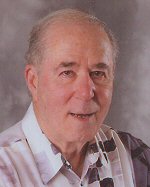 Mr.
Litvak has died. Howard Margol, who likely did more to advance
Lithuanian-Jewish genealogical research than any other person, died
this past Thursday, February 9. He was 92. Mr.
Litvak has died. Howard Margol, who likely did more to advance
Lithuanian-Jewish genealogical research than any other person, died
this past Thursday, February 9. He was 92. Margol began tracing his family history in 1990. He joined the newly formed Jewish Genealogical Society of Georgia and eventually served a two-year term as president of the society. Under his leadership, the membership grew from 65 members to 130 members. After his term as president, he continued to serve on its board of directors. Margol’s major impact was opening the Lithuanian archives to Jewish genealogical research. His first trip to Lithuania was in 1993. On subsequent trips, he developed a rapport with the archivists of institutions that had records of value to Jewish genealogical research. He negotiated arrangements with these archives to index the records which helped create the All-Lithuanian Database of the Litvak Special Interest Group (SIG) that now has more than one million records. He was a past president of Litvak SIG, and he remained active as the Chair of the Records Acquisitions and Translations Committee of LitvakSIG until 2015. Starting in 1994, Margol and Peggy Mosinger Freedman organized annual trips to Lithuania for family history research that included visits to archives, Jewish sites and individual visits to towns of ancestry. This lasted until 2015, when declining health made it impossible for him to continue. Margol contributed several articles to AVOTAYNU about Litvak research. Typical was “Lithuanian Research Now and in the Future” in the Winter 2011 issue of the journal. His leadership in Jewish genealogy included areas beyond his Litvak interests. In 1996 he was elected to the board of the International Association of Jewish Genealogical Societies (IAJGS), serving nine years, two of which were as president of IAJGS. In 2008 he was awarded the IAJGS Lifetime Achievement Award. He was on the JewishGen Board of Governors for several years. His impact on Lithuanian Jewry extended beyond his interest in genealogy. He and his wife, Esther, founded the American Fund for Lithuanian-Latvian Jews. The Fund has supplied hundreds of thousands of dollars of support to the senior meals program of the Jewish Community of Lithuania in Vilnius, Lithuania, and to the Jewish Hospital in Riga. The fund has been a major financial supporter to the Jewish senior cafe in Vilnius, the Jewish senior meals program in Siauliai, the Jewish community in Panevezys, and the Jewish Museum in Vilnius. Margol was a private in the U.S. Army during World War II. He was present when Dachau was liberated. Margol related an emotional experience that occurred on a convoy of several thousand Jewish camp survivors being taken to luxury resorts high in the Austrian Alps. Even though they were only 20 minutes away from their destination, it was sundown on Friday and the survivors all got out and sat down on the side of the road. They refused to travel because it was the Sabbath. The survivors were placed in temporary quarters and then proceeded after sundown on Saturday night. I had the privilege of knowing him through his years of leadership in Jewish genealogy. I will always remember his Southern (Georgia) drawl and the tenacity with which he worked to get his projects done. People who wish to send condolences to the family can do so at http://jewishfuneralcare.com/guestbook3.php?funeralID=2996. May his memory be a blessing. MyHeritage Continues to Add Functionality to Family Trees Database  MyHeritage continues to add functionality to maintaining family trees located at their site.
 There is now a Consistency Checker that scans trees and identifies mistakes and inconsistencies in the data. The checker employs 36 different checks on the family tree data, ranging from the obvious (e.g., a person born before their parent, or a parent too young to be a parent) to the subtle and hard to find (e.g., a person tagged in a photo which was dated before his/her birth; or two full siblings born 5 months apart). Additional information can be found at https://blog.myheritage.com/2017/02/new-online-family-tree-consistency-checker/. A new Photo Discoveries feature provides users with a set of photographs of ancestors and relatives originating in family trees contributed by others. Users can add the photographs to the matching profiles in their family tree in a single click. Additional information can be found at https://blog.myheritage.com/2017/02/introducing-photo-discoveries/. GenealogyIndexer Adds Hungarian Directories and Yizkor Books  GenealogyIndexer.org
has added many Hungarian directories and six new yizkor books to its
collection. There are several Hungarian trade directories, the earliest
being an 1845 Hungary Trade Almanac. Also included are numerous
Budapest address/telephone directories from 1822–1950. The yizkor
books are for the towns of Kleck, Kobryn, Kielce, Kisvarda, Klobucko
and Klosova.
GenealogyIndexer.org
has added many Hungarian directories and six new yizkor books to its
collection. There are several Hungarian trade directories, the earliest
being an 1845 Hungary Trade Almanac. Also included are numerous
Budapest address/telephone directories from 1822–1950. The yizkor
books are for the towns of Kleck, Kobryn, Kielce, Kisvarda, Klobucko
and Klosova. The site states they have now indexed 721,000 pages of 1,502 historical directories (business, address, telephone, etc., mostly from Central and Eastern Europe), 102,000 pages from 231 yizkor books (memorials to Jewish communities destroyed in the Holocaust), 32,000 pages of military lists (officers, casualties, etc., mostly from the Russian Empire and Poland), 43,000 pages of community and personal histories, and 24,000 pages of Polish secondary school annual reports and other school sources. I have found the indexing of yizkor books particularly useful. There was a Mokotow family living in Garwolin, Poland, before the Holocaust. They are mentioned in the Garwolin yizkor book in an article written by the sole survivor of the family. GenealogyIndexer identified five other pages where the surname is mentioned. Family History Library Unveils “Discovery Experiences” Attraction  Frequently
I get inquiries from family/friends who indicate they are going to Salt
Lake City on business or recreation and want to know if there is any
merit in going to the Family History Library even though they know
nothing about family history research. My response has been that it is
unlikely they will find anything without knowing how to do genealogical
research. Frequently
I get inquiries from family/friends who indicate they are going to Salt
Lake City on business or recreation and want to know if there is any
merit in going to the Family History Library even though they know
nothing about family history research. My response has been that it is
unlikely they will find anything without knowing how to do genealogical
research.Now the Family History Library has created a new attraction geared to these people. It is a 10,139 square feet, interactive “discovery experiences” exhibit. The new attraction is located on the main floor of the library and is designed to introduce guests to the many fun facets of personal and family discovery. The new facility has more than 100 custom iPads, 44 touch-screen monitors, and 42 computers with research and discovery-experience capability. Six recording studios create free, high definition audio and video recordings that can be used to preserve family memories for future generations. The facility is family friendly. There is an enclosed space for parents with smaller children that allows these parents to explore their family history while also being able to observe their children play. Additional information is at http://media.familysearch.org/family-history-library-unveils- salt-lake-citys-newest-attraction/. Last Chance to Take Advantage of Offer: Five issues of AVOTAYNU for the Priced of Four  The
Winter issue of AVOTAYNU is at the printer. It is our annual
“human interest” issue where we include articles about how
genealogy affected people’s lives. In addition, there are the
usual articles that help its readers expand their knowledge of Jewish
genealogy and Jewish history. Because of the dual purpose, there are an
unusual number of articles (23) and the edition has been expanded to 84
pages from the usual 68. The Table of Contents for the issue can be
viewed at http://avotaynu.com/2016WinterPage01.pdf. The
Winter issue of AVOTAYNU is at the printer. It is our annual
“human interest” issue where we include articles about how
genealogy affected people’s lives. In addition, there are the
usual articles that help its readers expand their knowledge of Jewish
genealogy and Jewish history. Because of the dual purpose, there are an
unusual number of articles (23) and the edition has been expanded to 84
pages from the usual 68. The Table of Contents for the issue can be
viewed at http://avotaynu.com/2016WinterPage01.pdf. Special offer. If you do not subscribe to AVOTAYNU, there is a special offer good until Tuesday. Subscribe to AVOTAYNU for 2017 and receive the Winter issue free—five issues for the price of four. The Spring 2015 issue will not be published until May. Go to http://www.avotaynu.com/journal.htm and choose one of the two Special Offers (domestic or foreign). When checking out, add the Discount Code "5for4D" if you live in the U.S. or Canada, or the Discount Code "5for4F" for those living in other countries. FamilySearch Additions for the Week  FamilySearch
has not made a formal announcement this week about new record
collections and additions to collections, but adding indexes and
digital images continues—many valuable to Jewish family history
research. The most recent additions can be found at https://familysearch.org/search/collection/list. Click the words “Last Updated” to provide the list in chronological order, most recent first. FamilySearch
has not made a formal announcement this week about new record
collections and additions to collections, but adding indexes and
digital images continues—many valuable to Jewish family history
research. The most recent additions can be found at https://familysearch.org/search/collection/list. Click the words “Last Updated” to provide the list in chronological order, most recent first.
|
||||||||||||
| Nu?
What's New?
is published weekly
by Avotaynu, Inc. Copyright 2017, Avotaynu, Inc. All rights reserved To change an e-mail address, send a request to nuwhatsnew@earthlink.net To subscribe to AVOTAYNU, The International Review of Jewish Genealogy, go to http://www.avotaynu.com/journal.htm To order books from our catalog, go to http://www.avotaynu.com/catalog.htm To contact us by postal mail, write: Avotaynu, Inc.; 794 Edgewood Ave.; New Haven, CT 06515 Telephone (U.S.) : 475-202-6575 |
||||||||||||
