|
Nu?
What's New? Gary Mokotoff, Editor Volume 18, Number 49 | December 25, 2017 Every
government puts value on preserving its history. That is why we have
national archives. Genealogy preserves history; the history of a
family. It cannot be done without access to records, just as historians
cannot preserve a nation's history without access to records. It is a
greater good than the right to privacy. It is a greater good than the
risk of identity theft.
Past issues of Nu? What's New? are
archived at http://www.avotaynu.com/nu.htm
|
||
|
Underlined words are links to
sites with additional information.
Merry Christmas to Our Christian Readers The Clock Is Ticking: Make Your Donations to Genealogical Causes Just a week is left to make your annual contributions to those institutions who assist you with your family history research: JewishGen, JRI-Poland, Litvak SIG, Gesher Galicia, Ukraine SIG, Leo Baeck Institute and the like. I made my final contribution this past week. It was to Yad Vashem in Jerusalem. Mormon-Jewish Controversy: The Problem That Won’t Go Away 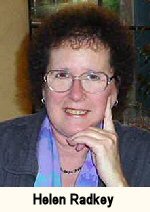 In
recent years, the Church of Jesus Christ of Latter-day Saints has been
successful in preventing whistle-blower Helen Radkey from gaining
access to their religious database that includes millions of people on
whom they have performed posthumous baptisms and other temple
ordinances. But the inevitable has happened. Radkey managed to gain
access to the ordinance database and what did she find? She found that
nothing has changed. Thousands, probably tens of thousands of Holocaust
victims have been posthumously baptized into the Mormon church in the
past few years. (Erroneously reported in the Associated Press version
as “proxy baptisms were performed on at least 20 Holocaust
victims.”) In
recent years, the Church of Jesus Christ of Latter-day Saints has been
successful in preventing whistle-blower Helen Radkey from gaining
access to their religious database that includes millions of people on
whom they have performed posthumous baptisms and other temple
ordinances. But the inevitable has happened. Radkey managed to gain
access to the ordinance database and what did she find? She found that
nothing has changed. Thousands, probably tens of thousands of Holocaust
victims have been posthumously baptized into the Mormon church in the
past few years. (Erroneously reported in the Associated Press version
as “proxy baptisms were performed on at least 20 Holocaust
victims.”)This is even though the Church states they have implemented additional safeguards, including adding four full-time staffers who watch the database and block baptisms on restricted names. Apparently four Mormons are not as effective as one Helen Radkey. Of course, the list of famous Jews being posthumously baptized grows. It now includes the Lubavitcher Rabbi Menachem Mendel Schneerson and his father, Rabbi Levi Yitzchak Schneerson, who were baptized in 2015. The late Ernest Michel, who led the discussions more than a decade ago is not included but Benjamin Meed, the late president of the American Gathering of Jewish Holocaust Survivors, and his wife, Vladka Peltel Meed, are in the Mormon database. The records state the submitter was his son Steven Meed. The Associated Press report can be found at https://tinyurl.com/BaptismsAP. A more comprehensive report was done by the Jewish Telegraphic Agency at https://tinyurl.com/BaptismsJTA. 30 Percent Discount on Ancestry Membership for Senior Citizens  The
American Association of Retired Persons (AARP) indicates that their
members can receive a 30 percent discount on subscriptions to
Ancestry.com. Register at https://www.ancestry.com/cs/aarp/members-save. There is an implication at http://www.ancestry.com/learnmoreforaarp that some discounts may also apply when existing members resubscribe. The
American Association of Retired Persons (AARP) indicates that their
members can receive a 30 percent discount on subscriptions to
Ancestry.com. Register at https://www.ancestry.com/cs/aarp/members-save. There is an implication at http://www.ancestry.com/learnmoreforaarp that some discounts may also apply when existing members resubscribe.Ancestry (RootsWeb) Announces Possible Security Breach Last
week, Ancestry’s Information Security Team received a message
from a security researcher indicating that he had found a file
containing email addresses/username and password combinations as well
as user names from a RootsWeb.com server. As a result of an analysis by
Ancestry, it was determined that the file was legitimate, although the
majority of the information was old. Though the file contained 300,000
email/usernames and passwords, through analysis it was determined that
only approximately 55,000 of these were used both on RootsWeb and one
of the Ancestry sites, and the vast majority of those were from free
trial or currently unused accounts.Because of this discovery, Ancestry has taken two immediate corrective actions. First, for the approximately 55,000 customers who used the same credentials at RootsWeb’s surname list and Ancestry—whether currently active or not—the company has locked their Ancestry accounts and will require that they create a new password the next time they visit. Second, Ancestry has temporarily taken RootsWeb offline, and they are working to ensure that all data is saved and preserved to the best of their ability. The complete story can be found at https://blogs.ancestry.com/ancestry/2017 /12/23/rootsweb-security-update. FamilySearch Additions This Week  A list of recent additions to FamilySearch, nearly 1.5 million indexed records and images, can be found at https://tinyurl.com/FamilySearch122117.
This site provides direct links to the individual collections. Those
identified with a dagger (†) are Christian-only records. They
include records from Brazil, England(†), Italy,
Nambia(†), Peru and the U.S. states of Delaware, Illinois, and
Michigan. In addition, more than 2M historic records from Find A Grave
were added.
A list of recent additions to FamilySearch, nearly 1.5 million indexed records and images, can be found at https://tinyurl.com/FamilySearch122117.
This site provides direct links to the individual collections. Those
identified with a dagger (†) are Christian-only records. They
include records from Brazil, England(†), Italy,
Nambia(†), Peru and the U.S. states of Delaware, Illinois, and
Michigan. In addition, more than 2M historic records from Find A Grave
were added.Note that at the website, announced collections may not be complete for the dates specified and will be added at some later date. Also note that counts shown in the announcement are the number added, not the total number available in the collection, which can be greater. Blog on How to Use FamilySearch FamilySearch
has published an excellent write-up on how to use the various
components of their system. For example, it explains the meaning of the
icons to the right of results. Subsections of the article are: • Using FamilySearch’s Records • Understanding Record Availability at FamilySearch • Searching Records Not Available at FamilySearch The blog posting is at https://www.familysearch.org/blog/en/whats-search-records-home. FamilySearch Adds Gazetteer FamilySearch
has added a gazetteer to its overall system. Called “FamilySearch
Places,” it will—at a minimum—locate a town anywhere
in the world using Google Maps. Some of the additional information it will provide is:• Nature of the place (populated place, province, etc.)—probably taken from the U.S. Board of Geographic Names database • Local history from three specific websites • Link to Wikipedia entry, if it exists • Link to FamilySearch for records that include the place name. • Places within five miles of location • Places within the same jurisdiction Using the new feature demonstrates the system is very much in its infancy. In every feature I ran into problems using the Mokotow ancestral town of Warka, Poland, and Warsaw, the capital of Poland. • Nature of the place (populated place, province,). It shows Warsaw as a province and not a populated place. • Local history from three identified websites. There was no information for Warka or Warsaw. Warsaw likely because it was not considered a populated place. • Link to Wikipedia entry, if it exists. The Wikipedia entry for Warsaw is present. For Warka it is absent. • Link to FamilySearch for records that include the place name. Warsaw produced 233,155 results. On the first page were all deaths in Warsaw taken from the BillionGraves database. • Places within five miles of location. Because the FamilySearch source is likely the U.S. Board on Geographic Names database, every speck of a location is shown. For Warka, about 100 locations are identified as being within 5 miles of the town. • Places within the same jurisdiction. Equally useless because it treated Warsaw as a province and the system identified the thousands of towns within Warsaw province. FamilySearch Places is a great concept, but is quite useless now if Warka and Warsaw are typical examples. JewishGen Communities Database and JewishGen Gazetteer at https://www.jewishgen.org/Communities/ contains some of the features of FamilySearch Places and works quite well. The Family Places announcement can be found at https://www.familysearch.org/blog/en/whats-familysearch-places/. Reclaim The Records Releases Buffalo, New York, Death Index  Using
the New York State Freedom of Information Law, Reclaim The Records has
received and published the death index for Buffalo, New York, for the
years 1852–1944. They estimate that there are about 640,000 names
listed. For the years 1891–1897, there is an additional second
page with information on the father and mother—name, place of
birth, street address of death and exact date of death. Using
the New York State Freedom of Information Law, Reclaim The Records has
received and published the death index for Buffalo, New York, for the
years 1852–1944. They estimate that there are about 640,000 names
listed. For the years 1891–1897, there is an additional second
page with information on the father and mother—name, place of
birth, street address of death and exact date of death. The index records can be found at https://archive.org/details/buffalodeathindex. Additional information about the announcement can be found at https://www.reclaimtherecords.org/records-request/14/. OpenArchives Site Has Records on 174 Million People in Dutch and Belgian Archives  Jan
Meisels Allen, Chairperson, IAJGS Public Records Access Monitoring
Committee, reports that the website, OpenArchives, has information
about 174 million people in the Dutch and Belgian archives. The website
is located at https://www.openarch.nl/. Jan
Meisels Allen, Chairperson, IAJGS Public Records Access Monitoring
Committee, reports that the website, OpenArchives, has information
about 174 million people in the Dutch and Belgian archives. The website
is located at https://www.openarch.nl/. Results of a search provide name, role (examples: child, mother, bride), event, date, place and source. Example of some sources are vital records and notarial records. Remarkably, some of the death records show place of death as Auschwitz, Sobibor or Westerbork. Almost all records were Dutch—very few Belgian place names. Clicking on an individual produces a two-generation family tree (parents) and sometimes the exact birth date/place. Some of the sources are family trees. To get a copy of the source documents requires logging in and a subscription.
|
||
| Nu?
What's New?
is published weekly
by Avotaynu, Inc. Copyright 2017, Avotaynu, Inc. All rights reserved To change an e-mail address, send a request to nuwhatsnew@earthlink.net To subscribe to AVOTAYNU, The International Review of Jewish Genealogy, go to http://www.avotaynu.com/journal.htm To order books from our catalog, go to http://www.avotaynu.com/catalog.htm To contact us by postal mail, write: Avotaynu, Inc.; 794 Edgewood Ave.; New Haven, CT 06515 Telephone (U.S.) : 475-202-6575 |
||
