|
Nu?
What's New? Gary Mokotoff, Editor Volume 21, Number 38 | September 21, 2020 Every
government puts value on preserving its history. That is why we have
national archives. Genealogy preserves history; the history of a
family. It cannot be done without access to records, just as historians
cannot preserve a nation's history without access to records. It is a
greater good than the right to privacy. It is a greater good than the
risk of identity theft.
Past issues of Nu? What's New? are
archived at http://www.avotaynu.com/nu.htm
|
||
|
Underlined words are links to
sites with additional information.
Happy New Year! 5 Things Everyone Should Know About Consumer DNA Tests  Ancestry’s
Director of Scientific Communications has written an essay on the five
things everyone should know about Consumer DNA tests. It focuses on: Ancestry’s
Director of Scientific Communications has written an essay on the five
things everyone should know about Consumer DNA tests. It focuses on:• Your DNA is different from your brothers’ and sisters’, even though you have the same parents. • Your DNA results don’t always fall within modern country borders. • Your DNA. doesn’t change, but the methods used to analyze it do. • You own your personal genetic data. • You must go beyond DNA to get the complete picture of your family history and origins. It can be read at https://tinyurl.com/AncstryDNA5Things.  Last Chance to Listen to IAJGS Conference Presentations Persons who registered for the IAJGS 40th International Conference on Jewish Genealogy, held virtual in August, have until October 13 to view the lectures presented at the conference. If you never registered, you can do so now at http://iajgs2020.org, and have access to the program. Library of Congress Launches New Tool to Search Historical Newspaper Images The public can now explore more than 1.5 million historical newspaper images online and free of charge at the U.S. Library of Congress site. The latest machine learning experience from Library of Congress Labs, Newspaper Navigator, allows users to search visual content in American newspapers dating 1789–1963.  For
decades, partners across the United States have collaborated to
digitize newspapers through the Library’s Chronicling America
website at https://chroniclingamerica.loc.gov/.
It is a database of historical U.S. newspapers. The text of the
newspapers is made searchable by character recognition technology, but
users looking for specific images were required to page through the
individual issues. Newspaper Navigator now makes images in the
newspapers searchable by enabling users to search by visual similarity. For
decades, partners across the United States have collaborated to
digitize newspapers through the Library’s Chronicling America
website at https://chroniclingamerica.loc.gov/.
It is a database of historical U.S. newspapers. The text of the
newspapers is made searchable by character recognition technology, but
users looking for specific images were required to page through the
individual issues. Newspaper Navigator now makes images in the
newspapers searchable by enabling users to search by visual similarity.Additional information can be found at https://www.loc.gov/item/prn-20-060/?loclr=ealn. Search using Newspaper Navigator at https://news-navigator.labs.loc.gov/search. Genealogy Basics Chapter Five: Digitizing and Storing Photos and Documents  MyHeritage
fifth chapter on Genealogy Basics focuses on digitizing and storing
photographs and documents. Principal topics are: MyHeritage
fifth chapter on Genealogy Basics focuses on digitizing and storing
photographs and documents. Principal topics are:• How to digitize your photos • Best practices for digitization • Colorizing and enhancing your photos • Sharing scanned documents and photos The complete article can be read at https://tinyurl.com/MHBasicsChap5. Donating Your Family Papers – How, When, Where and Why? 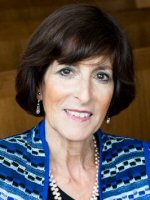 Karen
Franklin, Director of Family Research at the Leo Baeck Institute, is
donating her voluminous family papers to the Institute, providing her a
unique dual perspective on the donation process as both a donor and a
recipient. On October 7 at 4pm ET, she will give an online lecture that
will address what you can do to organize and prepare your collection
for donation to ensure that the material will be accessible and
meaningful to future researchers. Karen
Franklin, Director of Family Research at the Leo Baeck Institute, is
donating her voluminous family papers to the Institute, providing her a
unique dual perspective on the donation process as both a donor and a
recipient. On October 7 at 4pm ET, she will give an online lecture that
will address what you can do to organize and prepare your collection
for donation to ensure that the material will be accessible and
meaningful to future researchers. Franklin will cover topics including the types of collections that are accepted, what to do with difficult and personal information, and requesting access restrictions. She will also share a few of the many family secrets she uncovered in the process of preparing her donation. Additional information, including how to register can be found at https://programs.cjh.org/tickets/family-history-today-2020-10-07. News from Library and Archives Canada  Library
and Archives Canada (LAC) is welcoming back visitors in the Halifax and
Winnipeg areas. In Halifax, you may drop by their service desk and
digital kiosk located within the Canadian Museum of Immigration at Pier
21 without reserving in advance. In Winnipeg, their research and
consultation room is also reopening, by reservation only. Additional
information is at https://tinyurl.com/LACReopenings. Library
and Archives Canada (LAC) is welcoming back visitors in the Halifax and
Winnipeg areas. In Halifax, you may drop by their service desk and
digital kiosk located within the Canadian Museum of Immigration at Pier
21 without reserving in advance. In Winnipeg, their research and
consultation room is also reopening, by reservation only. Additional
information is at https://tinyurl.com/LACReopenings.
LAC has closed its Archives Search tool. Collection Search already contains everything from Archives Search, plus content from twenty-two other LAC databases. It also has dozens of additional features and functionalities. Additional information can be found at https://tinyurl.com/LACloseArchiveSearch. Historical Record Collections Added by MyHeritage in August MyHeritage
added 19.3M from 15 different record collections in August. The new
collections include seven from the U.S.: death indexes from
Massachusetts, Wisconsin, Arkansas, and Nebraska; birth indexes from
Massachusetts and Wisconsin; and a marriage index from Wisconsin. Three
new collections from Australia were added: a birth index, a passenger
list, and a wills and probate collection. From Canada, a Nova Scotia
birth records collection was added. Also added were updates to both the
Greece Electoral Rolls collection and to the France Death Index. An
index of displaced persons and refugees from the World War II era and
an update to the Israel Genealogy Research Association collection were
included, both free of charge. MyHeritage reports they now has 12.52B
historical records.Additional information is at https://tinyurl.com/MyHAugust2020. FamilySearch Adds 1M Records This Week  A
list of recent additions to FamilySearch, 1M index records and images,
can be found at https://tinyurl.com/FamilySearch091420.
This site provides direct links to the individual collections. A
list of recent additions to FamilySearch, 1M index records and images,
can be found at https://tinyurl.com/FamilySearch091420.
This site provides direct links to the individual collections. A major addition is to the index of Southeast Idaho Counties Obituaries, 1864–2007. Note that at the website, announced collections may not be complete for the dates specified and will be added at some later date. Also note that counts shown in the announcement are the number added, not the total number available in the collection, which can be greater. New Collections at Ancestry.com Most of the
collection added/updated by Ancestry this week are church related.
Below are those not associated with churches. The list with links to
individual collections can be found at https://www.ancestry.com/cs/recent-collections.
Announced collections may not be complete for the dates specified and
will be added at some later date. There is also no indication of how
many records were added to the updated collections.New Collections Yates County, New York, Swann Vital Records Collection, 1723–2009 Newspapers.com Marriage Index, 1800s–1999
|
||
| Nu?
What's New?
is published weekly
by Avotaynu, Inc. Copyright 2020, Avotaynu, Inc. All rights reserved To change an e-mail address, send a request to info@avotaynu.com To subscribe to AVOTAYNU, The International Review of Jewish Genealogy, go to http://www.avotaynu.com/journal.htm To order books from our catalog, go to http://www.avotaynu.com/catalog.htm To contact us by postal mail, write: Avotaynu, Inc.; 794 Edgewood Ave.; New Haven, CT 06515 Telephone (U.S.) : 475-202-6575 |
||